Garage Doors · Barrie
Plain-language guides
For property managers and homeowners alike, these notes cover the practical side of door ownership: inspection intervals, what to log, how to brief a technician and how to compare options.
Call now · open 24/7(249) 315-4741- Service bulletin 1Garage Door Balance Adjustment: questions about the priceOften, yes. A door that has grown heavy makes the opener labour, the chain or belt slap, and the rollers and hinges complain under load they were never meant to carry.Read
- Service bulletin 2Garage Door Panel Replacement: before you callFrom outside, the horizontal groove between two sections now steps sideways by a centimetre. One section has shifted on its hinges after a roller jumped the track, and on the way down the door catches at exactly that…Read
- Service bulletin 3Belt-Drive Opener Repair: step by stepThe most common belt-drive repair is the simplest: the belt has stretched over thousands of cycles and hangs slack under the rail. On its way up it slaps the rail and skips a tooth or two on the sprocket.Read
Things people wonder
Repair & Maintenance
How long does the visit usually take?
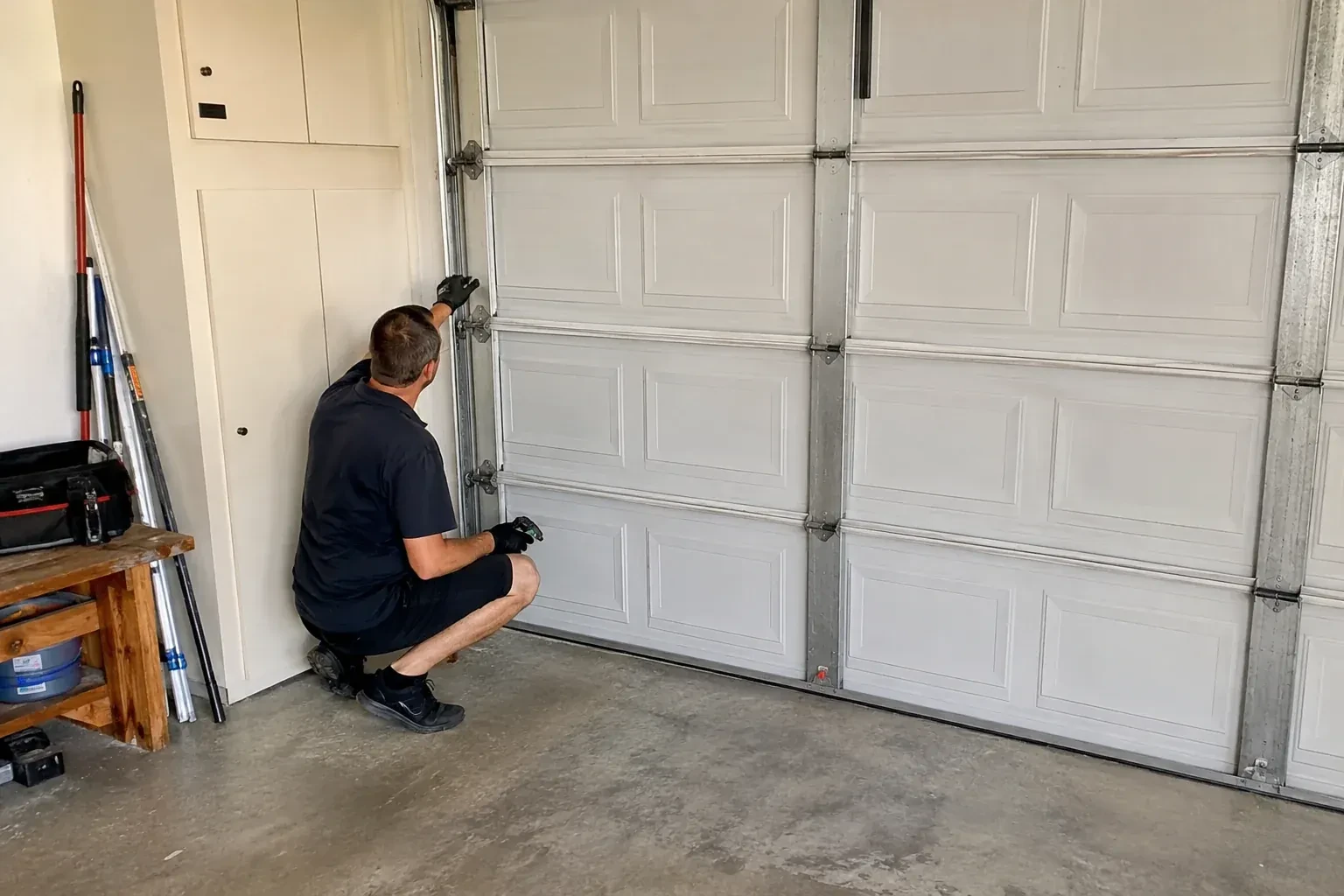
Plan for roughly an hour for a single door in ordinary condition, and longer for a double door, a second door on the property, or a door with a history that needs following up. Maintenance done on the spot adds a few minutes. A post-impact assessment, where the technician traces the force through the hardware, takes longer than a routine check. You are told at the door if the scope is growing. Garage Door Safety Inspection
How long does a tune-up take?
For a single or double residential door with an opener, allow roughly an hour to two hours on site. The inspection and the two observed cycles take a fixed amount of time; the rest depends on how many fasteners have loosened, whether the sensors need realigning and whether you approve a small part replacement, such as a worn roller, during the same visit. Spring or cable work, if found necessary, is scheduled as its own job. Garage Door Tune-Up
Are the springs involved in an off-track door?
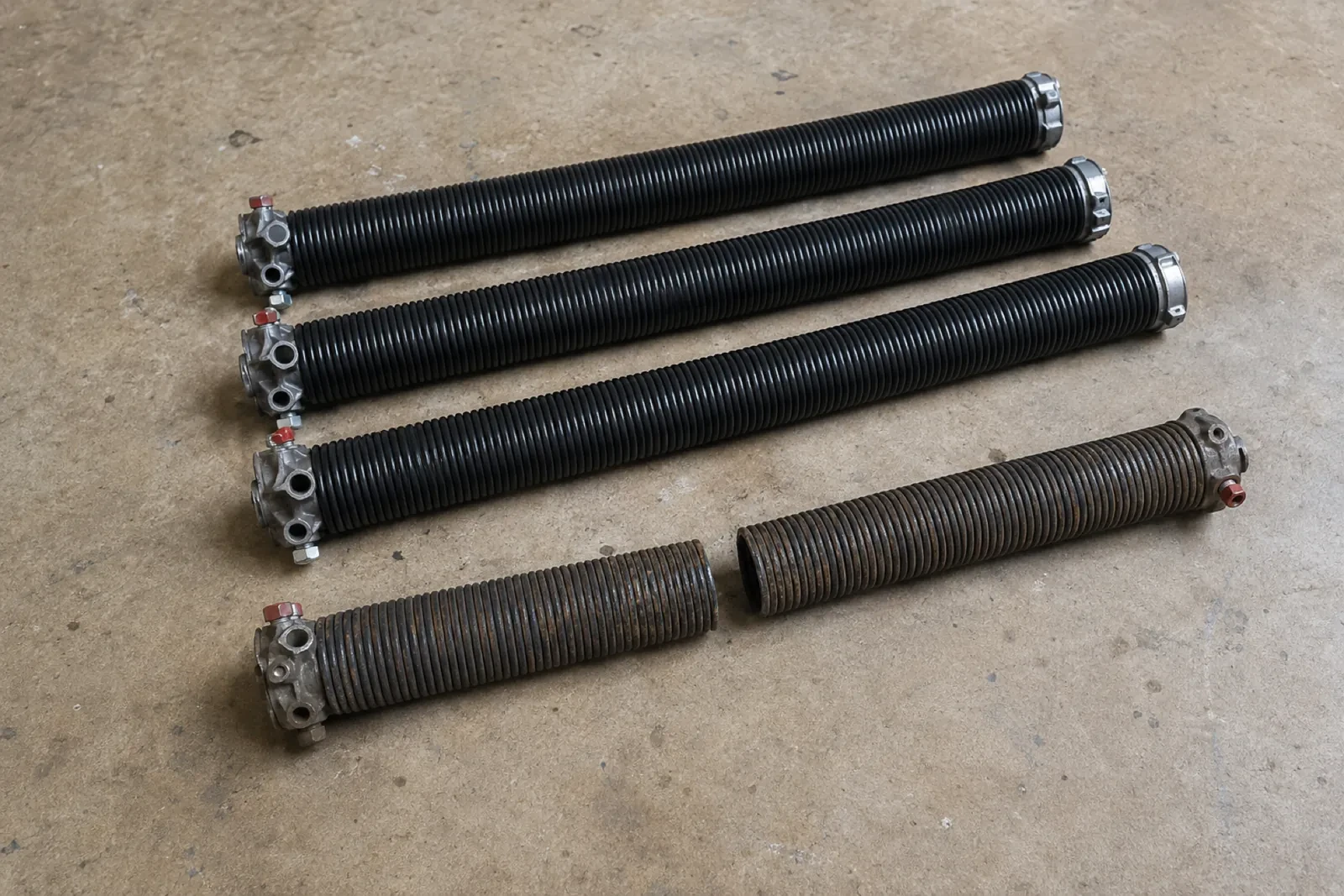
Frequently, in one of two ways. Springs that are worn, broken or mismatched to the door's weight make the opener carry a load it was never meant to, dragging the sections out of line. And whenever cables must be re-seated or replaced, the spring tension has to be released and rewound to do it. The technician assesses the springs at the start and tells you whether they are part of the fix. Off-Track Garage Door Reset
Can the replacement section be a different style, as an upgrade?
Within one door, sections need to share the same joint profile, thickness and hinge spacing, so a section from a different design generally does not mate with its neighbours. What you can change is a detail the manufacturer offers for your model, such as ordering the top section with windows or adding decorative hardware. If you want a genuinely different look or insulation level, that is a conversation about a new door rather than one section. Garage Door Panel Replacement
Springs & Hardware
My door is heavy insulated steel. Which rollers suit it?
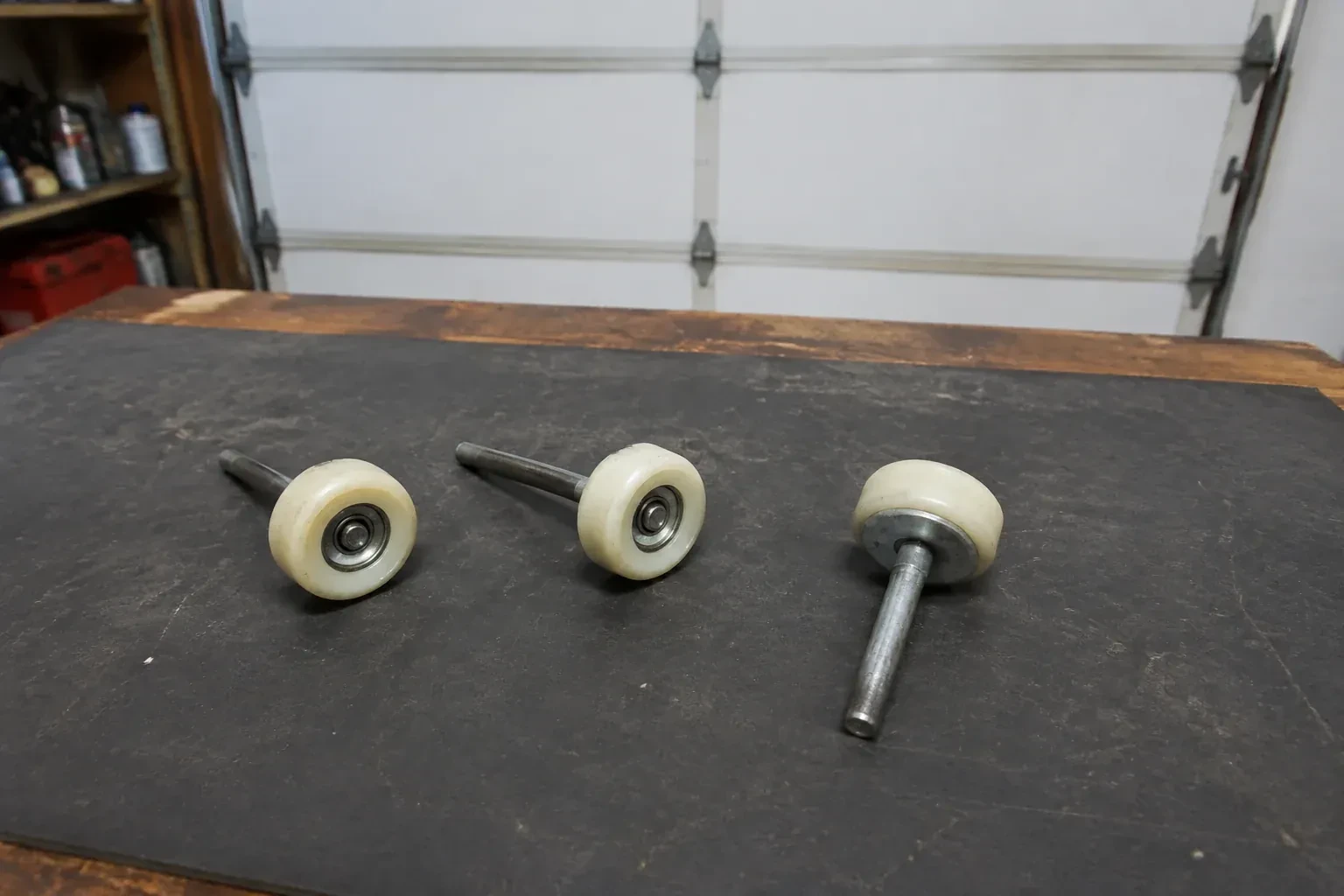
A heavier door needs rollers with a load rating to match, generally ball-bearing rollers rated around seventy-five to one hundred pounds each rather than the light plastic wheels many doors ship with. It often needs long-stem rollers at the double hinges on the end stiles, and the top rollers, which travel furthest under load, deserve the sturdiest in the set. Nylon with ten or more bearings suits most insulated residential doors; very heavy or commercial-weight doors may still call for steel. Garage Door Roller Replacement
Can I keep using the door until the hinge is replaced?
It is better to leave the door closed and use another way in and out. A joint with a failed hinge flexes more on every trip, which strains the neighbouring hinges, can pull a roller out of the track and can crease the panel itself. If the door is already open or stuck partway, leave it where it is rather than running the opener again. A closed, still door is what the technician hopes to find. Garage Door Hinge Replacement
Why does the door catch at the same spot every trip?
A catch that repeats in one place is the signature of a local track fault: a dent, a spread section, a step at a joint, or a bracket that has let the track drift. Each roller reaches the flaw at the same point in the travel and bumps over it. The technician finds the spot by running a roller through the channel by hand, then dresses or replaces that length and checks the rest of the run for the same problem. Garage Door Track Repair or Replacement
Why did the cable come off the drum?
A cable leaves its drum when it goes slack for a moment while the drum keeps turning. The usual reasons are the door closing onto an object or a ridge of ice so the bottom stops early, a spring that has lost tension or broken, or a drum whose set screws let it slip on the shaft. The technician finds which of these happened and corrects it so the new cable stays seated. Garage Door Cable Replacement
Openers & Access
Why does the door stop just above the floor and reverse?
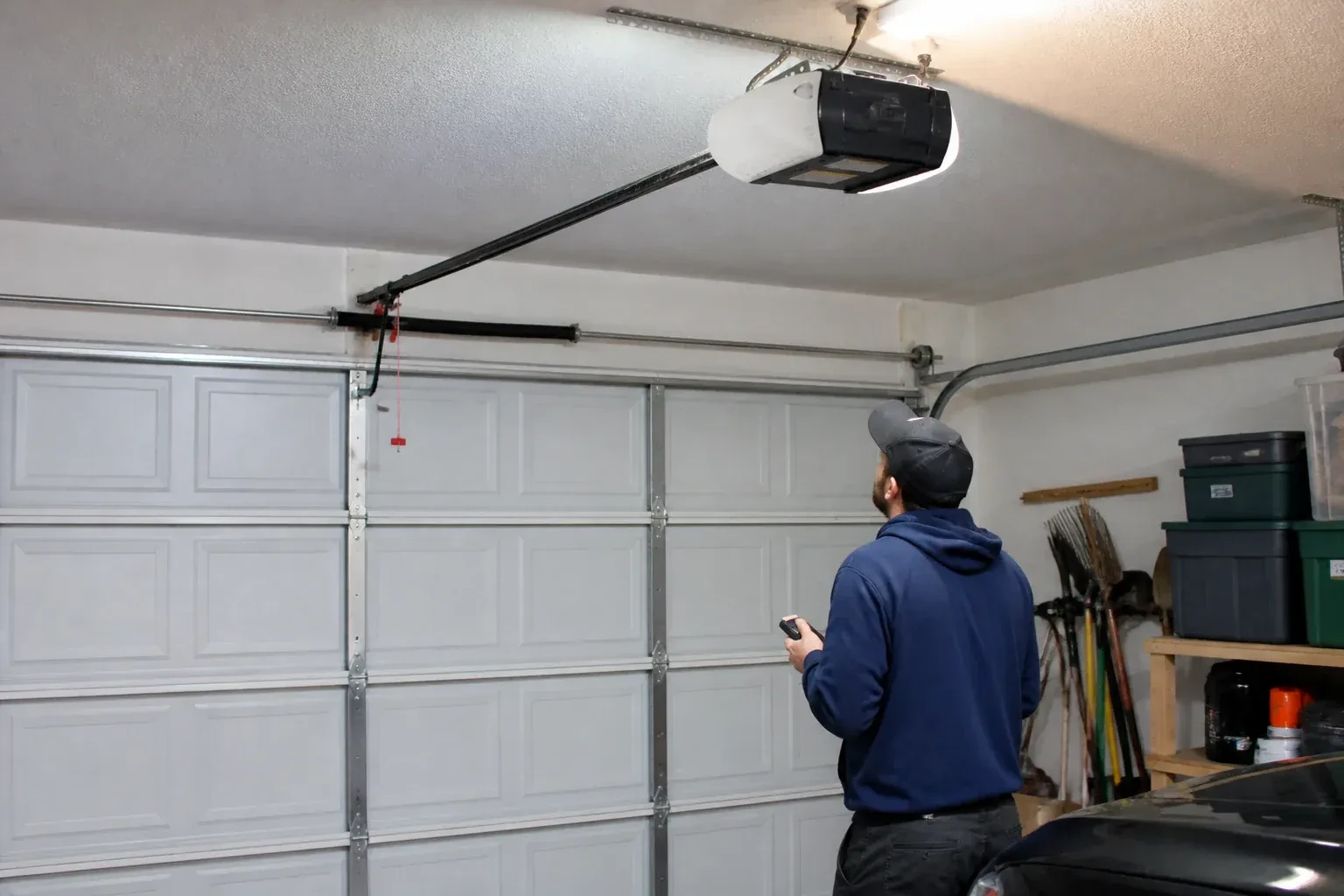
Two usual reasons. The travel limit is set a fraction too long, so the door reaches the slab, meets it harder than expected and interprets that as an obstruction. Or the bottom seal has stiffened or frozen and the last few centimetres take more force than the setting allows. Both are adjusted after the door is checked for balance, and the fix is confirmed by closing the door several times and running the contact reversal test. Garage Door Opener Diagnosis and Repair
Why does the door jerk or jump at the same spot every time?
A repeatable jolt at one point on the rail is usually a chain problem meeting a sprocket problem: a stiff link or a spread master link passing over worn sprocket teeth, so the chain rides up and drops a tooth. It can also be a burr or a splice plate on the rail where the trolley catches, or a roller on the door hanging up in the track at that height. The technician runs the door by hand first to tell the two apart. Chain-Drive Opener Repair
The belt is fine in summer but stiff and noisy in winter. Why?
Rubber stiffens in cold, so a belt in a detached garage behaves differently at minus twenty than in July. Tension set on a warm day may run tight in deep cold, and a frozen bottom seal can make the operator reverse before the door has moved. The technician sets tension to the opener maker's specified measurement rather than the season, and puts a cold-rated lubricant on the door hardware. Belt-Drive Opener Repair
Will the new opener cope with an unheated garage in winter?
Yes, when it is chosen for it. Manufacturers publish an operating temperature range for each model, and the technician matches that to a detached or unheated garage. The force setting is tuned so the door moves in the cold without the operator being oversensitive, the hardware gets a cold-rated lubricant, and a backup battery is kept charged by the unit. Clearing ice from the threshold remains the one winter chore. Garage Door Opener Replacement
Installation & Upgrades
Can replacement work with a low ceiling?
Often, provided the opening and overhead space are measured before ordering. Low-headroom track and other model-supported arrangements can change how the upper section moves through the curve and where counterbalance parts sit. The technician maps beams, pipes and the operator rail, then selects from configurations supported for the particular door. Sectional Garage Door Replacement
What information should I receive at handover?
Keep the door and opener manuals, product identification, care instructions and a description of the installed hardware. The closeout should also note manual balance, full-cycle travel and applicable safety tests. Window, finish and seal details help with future care, while model and component records make later parts selection more accurate than relying on appearance alone. Insulated Steel Garage Door Installation
How is the new door tested after installation?
Technicians cycle it by hand to assess balance, cable tracking, roller travel, clearances, and seal contact. After the operator is connected, they set the open and close limits, confirm the manual release, interrupt the photoelectric beam, and conduct the prescribed contact-reversal check. Hardware and reinforcement receive a final visual review with the door closed and raised. Wind-Rated Garage Door Replacement
Is a carriage-house door the same as a pair of swing-out doors?
Usually, no. A carriage-house sectional door is divided horizontally and follows tracks into the garage, while its panel pattern and decorative hardware suggest two hinged leaves. True swing doors move outward or inward on side hinges and need different clearances. Confirming which operation you want is the first selection decision because it changes the entire door system. Carriage-House Garage Door Installation
Open 24/7
Request a visit
Send a few details about your door
Call now · open 24/7(249) 315-4741- On-site assessment preferred
- Same fees day, night or weekend
- 22 years in business