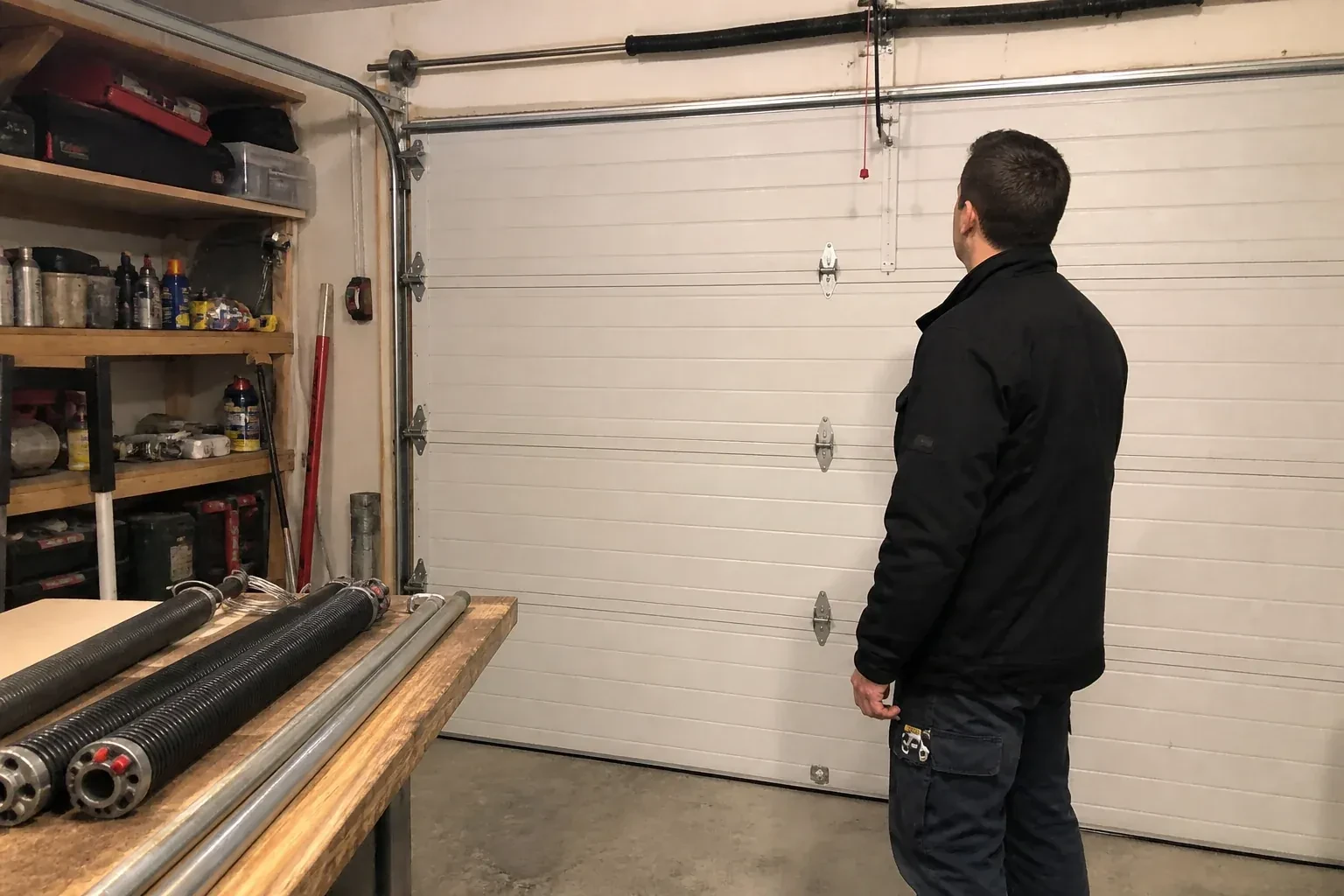
Emergency Springs · Painswick
Extension Spring Replacement in Painswick
The door climbs with the left corner ahead of the right, then twists as it turns into the ceiling track. Looking up, the spring on the right side is stretched longer than its partner, with daylight showing between the coils.
Call now · open 24/7(249) 315-4741Right now
Before the door is looked at
Call (249) 315-4741, open 24/7.
When a spring breaks, the safe approach for the household is to leave the door where it is, keep people and vehicles clear, and avoid running the opener, which can damage the top section, the trolley or the gear drive.
Pull the manual release only when the door is fully closed unless a technician asks otherwise; a door disconnected while partly open can move on its own if the springs are out of balance.
Never drive a vehicle at a closed door to get out; the door collapses and the stored tension in the counterbalance is released. Use the release, the outside key release, or a technician.
In plain words
Every extension spring should carry a containment cable, and replacement is the moment to make sure yours do. A containment cable runs through the centre of the spring and is anchored at both ends, to the rear hanger and to the bracket at the front of the track. It does no lifting; its purpose is to hold a spring that breaks so the pieces stay on the cable. Many older doors predate this practice, which a home inspection checklist checks for. When springs are replaced, new containment cables are fitted with them, which keeps a broken spring's pieces contained, not the door's weight, balance or safety.
How the visit goesThe door climbs with the left corner ahead of the right, then twists as it turns into the ceiling track. Looking up, the spring on the right side is stretched longer than its partner, with daylight showing between the coils.
Extension Spring Replacement · Painswick
How the visit goes
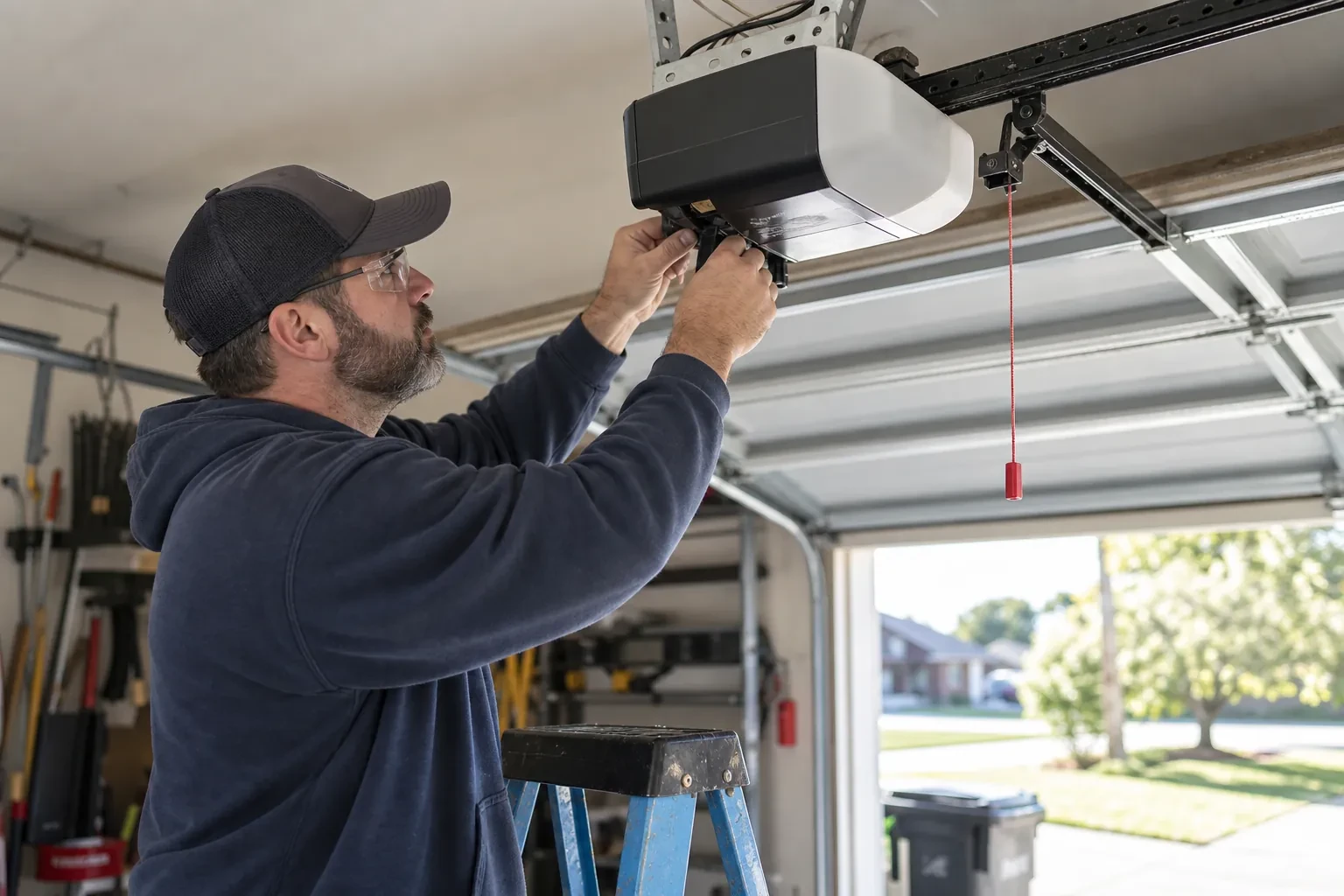
- 1
The rest of the door, and why the spring went
A spring rarely fails on its own, so the first look ends with the door it was lifting. The technician checks the rollers for cracked wheels and bent stems, the hinges for splits, the track for a bend or a bracket pulled off the jamb, and the bottom section for a dent that catches. The opener's force setting is noted, since an opener turned up to compensate for tired springs will overpower the new ones. And the history matters: a door recently fitted with insulation panels or windows weighs more than the springs were chosen for, and a door that has been closed onto snow or a bin has had its cables jolted.
- 2
Balancing the door by hand
Balance is judged with the opener still disconnected. The technician lowers the door to the floor, then lifts it: it should rise with modest effort, stay put when let go at about waist height, sit steady when fully open, and come down under control rather than dropping. If it sinks, both springs need a little more stretch and each S-hook is moved one hole to take up cable; if it climbs on its own, one hole the other way. Adjustments are always made in pairs, with the door open and clamped again each time, so the two springs stay equal. Two or three rounds usually settle it.
- 3
Knowing when the next set is due
A standard extension spring is made for a set number of open-and-close cycles, commonly in the ten-thousand range, which on a door used four times a day works out to several years and on a door used twice a week to much longer. Springs age even when idle, as rust does its slow work in an unheated garage. The signs that the set is nearing the end are gradual: the door feels heavier by hand, the opener sounds as if it is working, the door drifts down from halfway, and gaps appear between coils when the door is open. Acting on those signs turns the next replacement into a planned appointment rather than a bang in the night.
In the van
- Replacement rollers and hinges
- Rear spring hangers and angle iron
- S-hooks and adjusting clips
- Pulleys (sheaves) and forks
- Lag screws and hanger bolts
What affects the quote
- 1
Working room around the springs
Shelving, a stored canoe or a car parked under the tracks slows the work along the horizontal run. Clearing the sides of the garage beforehand keeps the time on the quote short.
- 2
One spring per side or two
Heavier doors sometimes carry a pair of springs on each side rather than one. Four springs, four containment cables and the extra setting time show as their own lines.
- 3
Weight added since the door went in
Insulation panels, windows or a wood overlay fitted after the original springs mean a heavier rating than the old pair. The door is weighed and the quote reflects the door as it is now.
Same fees day, night or weekend.
Extension Spring Replacement: questions
What does the paint colour on the end of the spring mean?
Manufacturers dab a colour on the end coil to indicate the spring's weight rating, which is a handy starting point. It is not the final word: a faded or repainted end coil tells you little, and the pair on an older door may have been a near match rather than the right one. The technician treats the colour as a hint and confirms the rating from the door's measured weight and the spring's own dimensions.
How do you know which springs my door needs?
By weight. Extension springs are rated for the weight they lift, so the technician releases the opener and weighs the door on a scale, then matches that figure and the door's height to a spring rating and stretch length. The old springs are measured as a check on wire size, coil diameter and length. Where the two disagree, the scale decides, since doors gain weight from added insulation or panels.
Can I use the door as soon as the work is done?
Yes. The last steps of the visit are the balance test by hand, several full cycles under power and the opener's reversal checks, so the door is ready for normal use when the technician leaves. New springs need no settling period. It is worth running it yourself once or twice while the technician is still there, so you know what a properly balanced door sounds and feels like from now on.
Springs & Hardware
Bigger photo, sooner job: Emergency Book soon Plan ahead
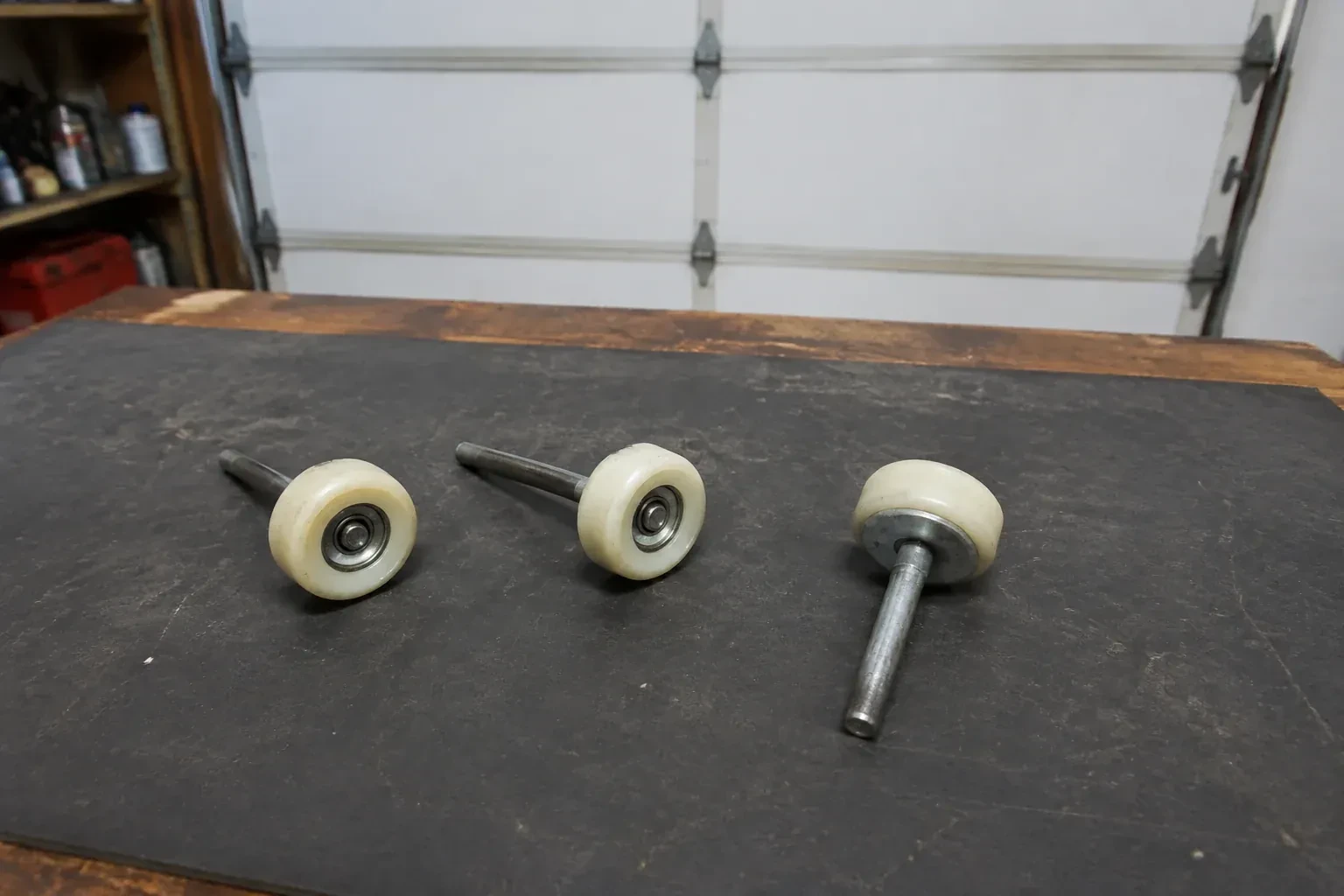 Book soonGarage Door Roller ReplacementThe door shudders as it rises, worst where the track bends from vertical to horizontal.
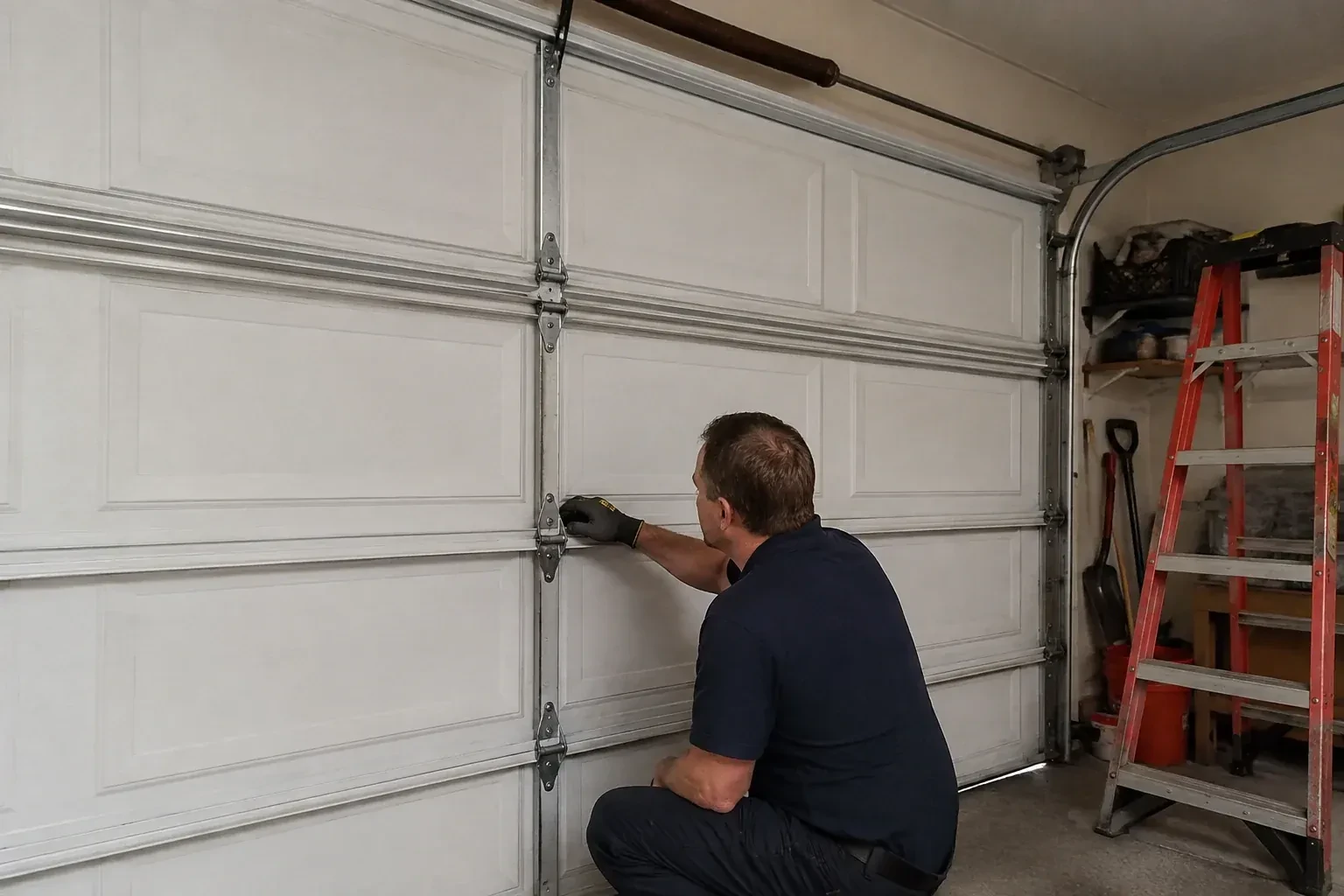 Book soonGarage Door Hinge ReplacementWith the door closed and a flashlight on the inside face, one of the hinges near the edge has a crack running from the screw hole…
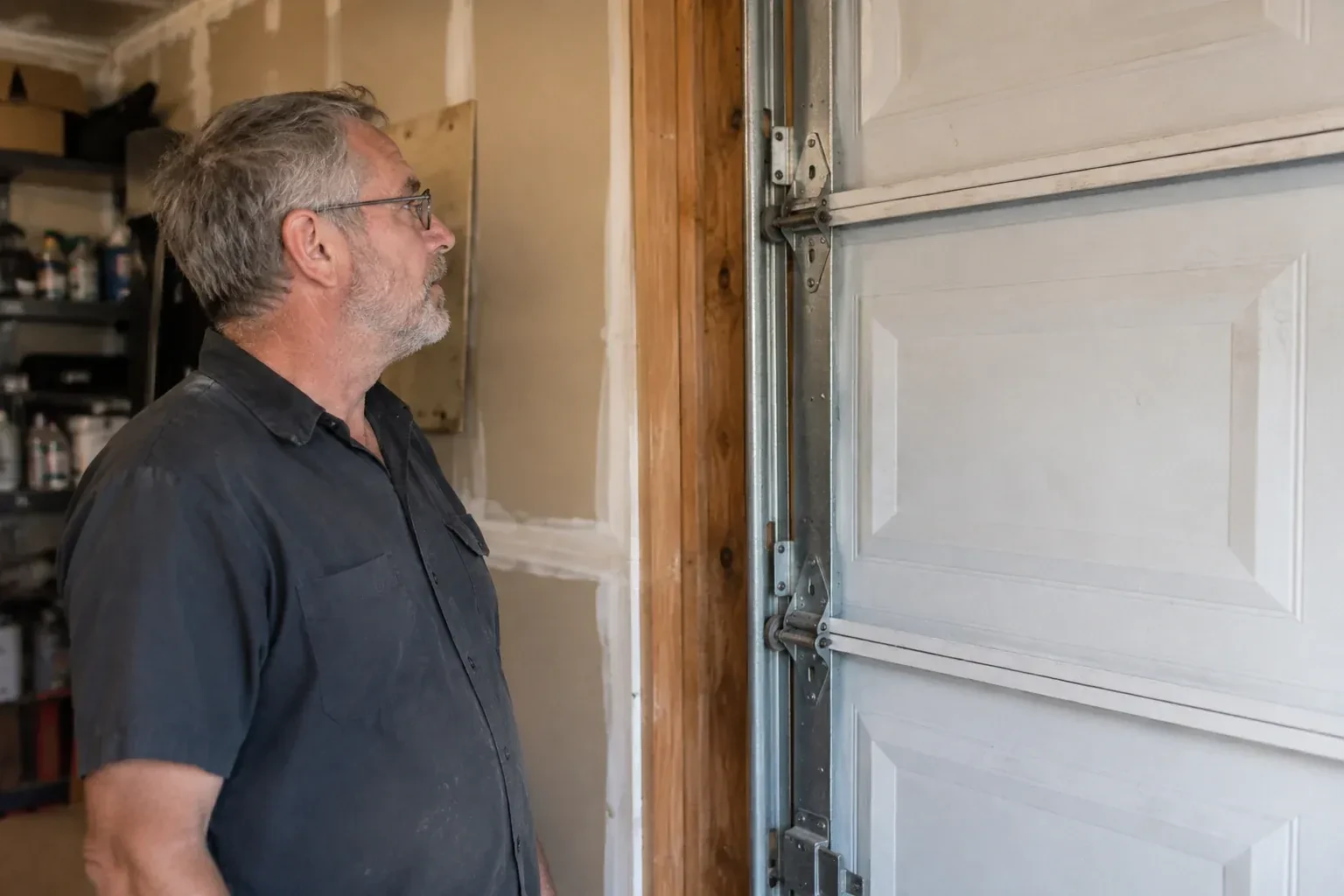 Book soonGarage Door Track Repair or ReplacementThe door climbs crooked, one side clearly ahead of the other.
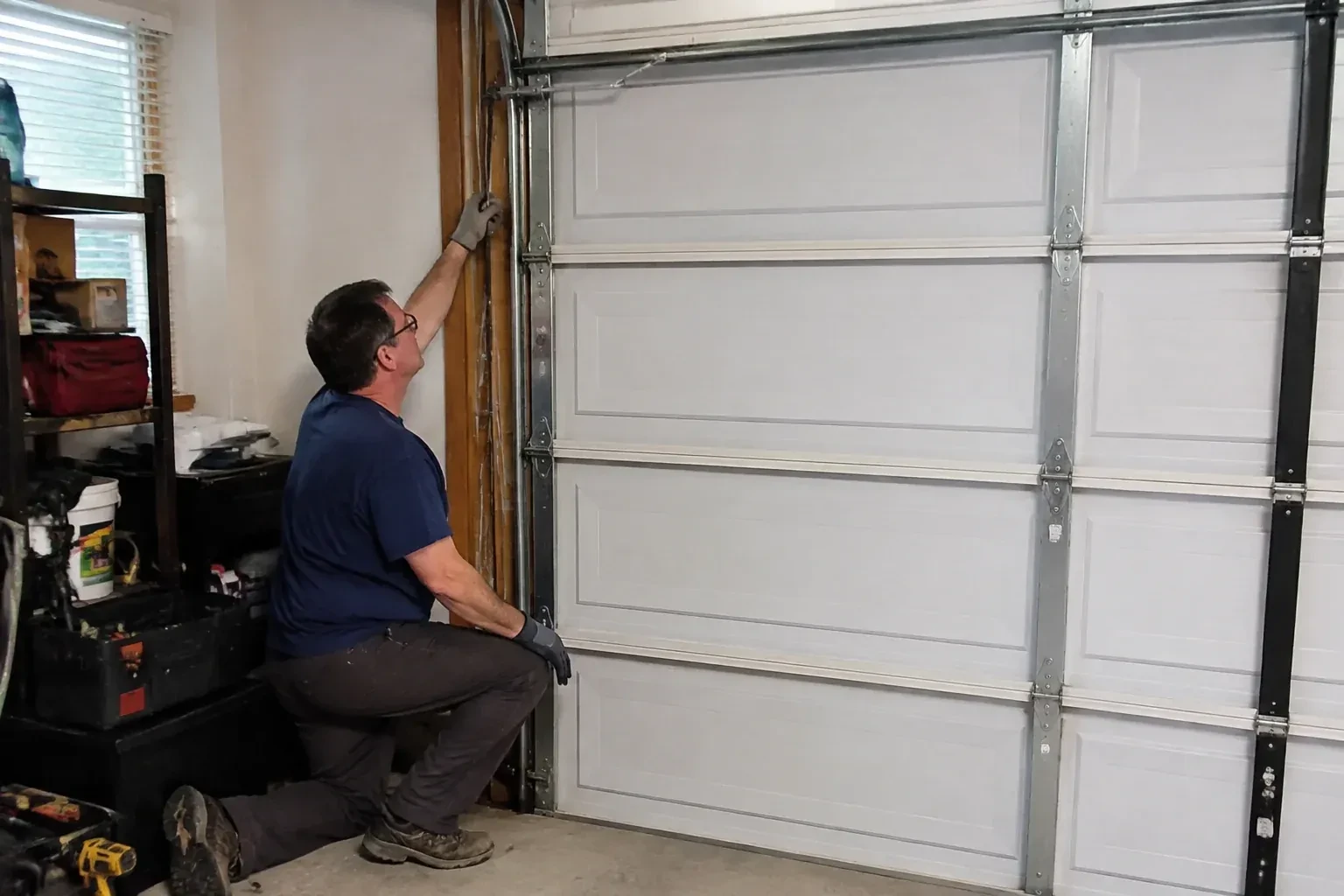 EmergencyGarage Door Cable ReplacementYour older door has springs along the tracks, and one cable has slipped off its pulley and dangles slack.
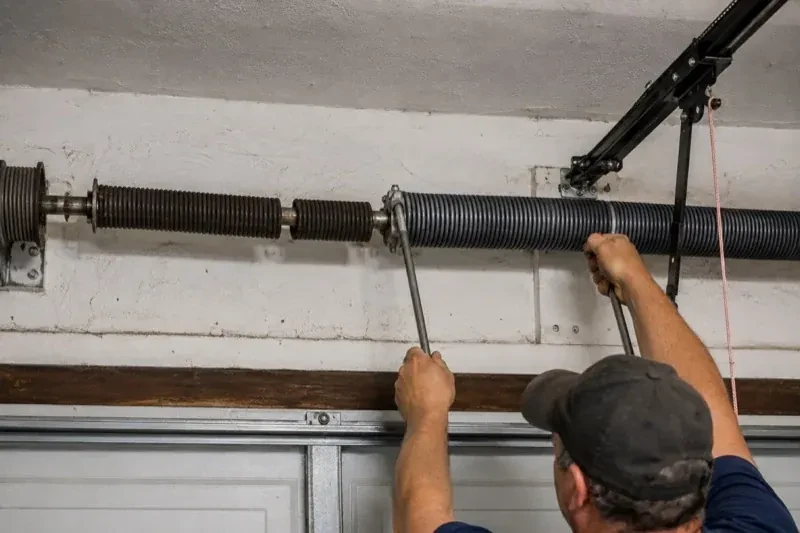 EmergencyTorsion Spring ReplacementLooking up at the coil above the door, you can see a clean split with a gap of several centimetres between the two halves.
Extension Spring Replacement near you
Simcoe, Ontario
Painswick information
- Town
- Painswick, Simcoe, Ontario
- In business
- 22 years
- Hours
- Open 24/7 · nights, weekends and holidays, same fees
- Phone
- (249) 315-4741
- Visits
- On-site assessment preferred. Request a visit or call.
What the census means at the door
29%
Newer homes. About 29% of homes in Barrie were built in 1980 or earlier, according to the 2021 Census.
In neighbourhoods built more recently, most garage doors are sectional steel on torsion springs with a belt or chain opener from the same era. The springs on these doors are rated for a set number of cycles, and many are now reaching the end of that first life.
58%
A mix of homes. Single-detached houses make up about 58% of homes in Barrie (2021 Census).
Where housing types are mixed, some doors belong entirely to the homeowner and others are subject to a condo corporation's rules on colour and style. Before recommending a replacement door we ask who has a say, so the door chosen is one that can actually be installed.
Open 24/7
Request a visit
The door climbs with the left corner ahead of the right, then twists as it turns into the ceiling track.
Call now · open 24/7(249) 315-4741- On-site assessment preferred
- Same fees day, night or weekend
- 22 years in business